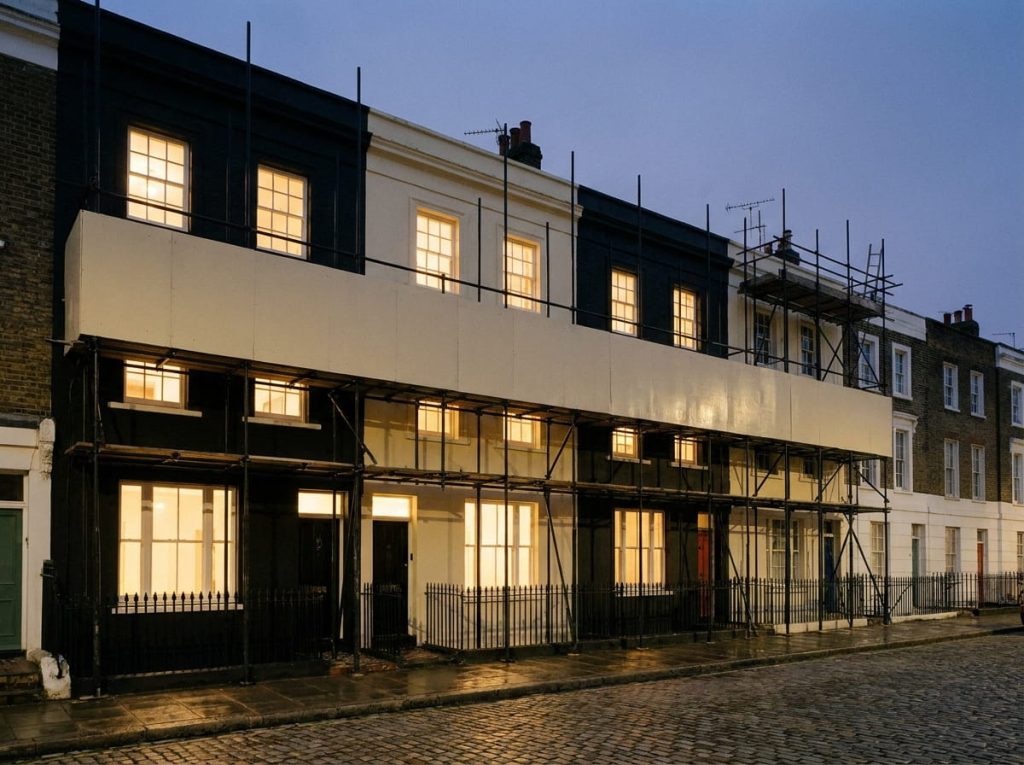
Most people check the builder’s quote, the programme and the finish. Far fewer check their own insurance. Yet a standard home policy is written for a home in normal use, and a building site is not that. Telling your insurer is one of the cheapest and most important steps in any renovation.
This guide is general information, not insurance advice. Policies differ, so always check your own wording.
1. Tell Your Insurer Before Work Starts
Cosmetic jobs such as painting or putting up shelves normally don’t need declaring. Structural work and larger projects do, including extensions, loft conversions, basements and a new kitchen or bathroom involving structural or services changes.
Why it matters: if work goes ahead without the insurer knowing, damage connected to that work may not be covered, and in the worst case the policy could be affected. Some insurers allow a limited value of minor building work without notification, but allowances vary, so ask and get the answer in writing.
When you call, tell them:
- What the work is and who is doing it
- The start date and expected duration
- The cost of the work
- Whether you will be living in the house
2. Understand What Your Policy May Exclude
During building work, insurers may add conditions or exclusions. Common examples:
- Storm or flood damage to unfinished extensions or alterations
- Accidental damage cover that is optional, not standard
- Security conditions, such as locks or alarms, with claims refused if a break-in was avoidable
Read the exclusions, not only the headline cover.During building work, insurers may add conditions or exclusions. Common examples:
- Storm or flood damage to unfinished extensions or alterations
- Accidental damage cover that is optional, not standard
- Security conditions, such as locks or alarms, with claims refused if a break-in was avoidable
Read the exclusions, not only the headline cover.
3. If the House Will Be Empty
Most policies limit how long a home can be unoccupied, often 30 or 60 days. After that, cover can be reduced to a short list of events such as fire. If you are moving out for a major renovation:
- Ask your insurer what their limit is, and what changes after it
- Ask about a specialist unoccupied or renovation policy
- Turn off the water supply when the house is empty, if the plan allows
- Keep the site secure, and don’t leave keys anywhere obvious
4. Check the Builder’s Insurance, Not Just Yours
Your policy and your contractor’s policy do different jobs. Before signing, ask for the certificates and check:
- Public liability: it covers injury to others or damage to their property. Check it is current, will not expire mid-project, and the limit is appropriate for the size of the job
- All-risks (contract works) cover: it can cover the works themselves and materials on site
- Exclusions: look for exclusions such as work involving heat (fire damage from tools), or limits on height or depth for extensions and basements
- Who is named: check the company name on the certificate matches the company you are contracting with
You can share the contractor’s insurance details with your own insurer so they can see how the two fit together.
5. When You Might Need Specialist Renovation Cover
For bigger structural projects, loft conversions, basements and extensions, a specialist renovation or building works policy is often needed in place of standard home cover. Typical features can include cover for the existing structure and the new work, materials on site, public liability, alternative accommodation, and legal expenses. Terms vary by product, so compare what is actually included. An insurance broker can help find policies for your situation.
6. Tools, Materials and Contents
- Materials and equipment stored on site are a theft target, so ask who is responsible if they are stolen
- If you are living in the house, check you have accidental damage cover for contents, which is often optional
- Photograph rooms and valuables before work starts, so you have evidence if something is damaged
7. After the Work: Update Your Policy
Buildings insurance is based on the rebuild cost, not the market value. A renovation can change that figure, for example with an extra room or a higher-spec finish. Tell your insurer once the work is complete, update the rebuild value, and ask whether the premium changes. Security upgrades may help, while some additions, such as a log burner, can raise it.
8. Leaseholders and Shared Buildings
If you own a flat, the building’s insurance is usually arranged by the freeholder or management company, and your lease may have rules about alterations and who must be told. Check the lease and ask the managing agent what is required before work starts. Your own contents cover should still be reviewed.
A Short Checklist
- Phone your insurer before work starts and get their response in writing.
- Ask what happens if the house is empty for more than their limit.
- Collect your contractor’s public liability and works insurance certificates.
- Check exclusions for heat, height and depth, and the expiry dates.
- Photograph the property and contents beforehand.
- Keep receipts, contracts and contractor details.
- Update your rebuild value when the work is finished.
Questions to Ask Your Builder
- What insurance do you hold, and can I see the certificates?
- What are the limits, and do they cover this size of project?
- Are there any exclusions I should know about?
- Who is responsible for materials stored on site?
- Who do I contact if there is damage?
At Alborz Groups, we plan projects so the practical details are agreed before work begins, from programme and site arrangements to the paperwork around them. If you’re planning a renovation and want a clear plan from the start, get in touch for an initial consultation.