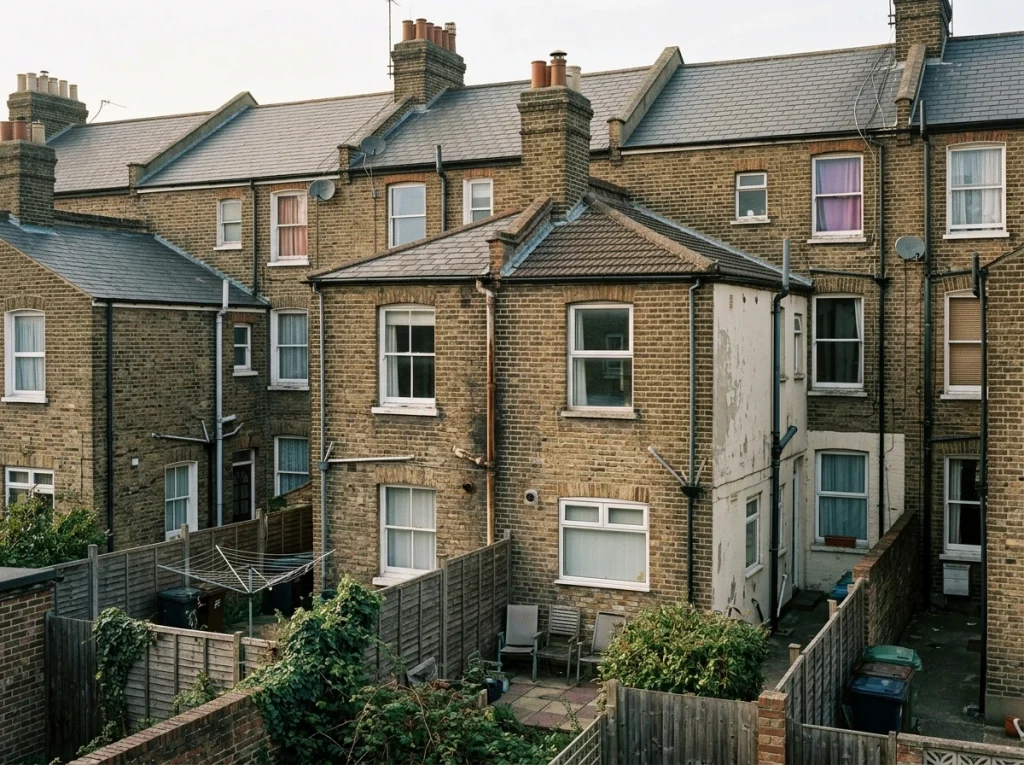
If you live in a terrace, a semi-detached house or a flat, there is a good chance that your renovation will involve a neighbour’s wall, boundary or foundations. When it does, a law called the Party Wall etc. Act 1996 comes into play. It is one of the most common causes of delay on London projects, mostly because people find out about it late.
This is a plain-English guide to what it covers and how the process works. It is general information, not legal advice.
What the Act Is For
The Act gives you a clear process for building work that affects a shared wall or boundary, or that digs near a neighbour’s foundations. It protects both sides: you can do your work, and your neighbour has a way to make sure their property is protected.
It is separate from planning permission and building regulations. You can have both of those approved and still need to follow the Party Wall Act. Getting one does not replace the others.
What Kind of Work It Covers
The Act applies to three broad situations:
- Work to an existing party wall or party structure. This includes cutting into a shared wall, raising or lowering it, rebuilding it, inserting a beam or removing a chimney breast. A party wall is one that stands on the land of two or more owners and separates their buildings.
- Building a new wall on or against the boundary. This includes building a new wall wholly on your land right up to the boundary, or building astride the line between the two properties.
- Digging near a neighbouring building. This covers excavation within 3 metres of a neighbouring building that goes deeper than the neighbour’s foundations, and excavation within 6 metres where the work would cut a line drawn downward at 45 degrees from the bottom of their foundations.
The third case is why basement conversions, deep foundations and some rear extensions trigger the Act even where no shared wall is touched.
The Three Types of Notice
Each situation has its own notice, and each has a minimum period before work can start:
| Situation | Notice | Minimum notice |
|---|---|---|
| Work to an existing party wall | Party structure notice | Two months |
| New wall at the boundary | Line of junction notice | One month |
| Excavation within 3 or 6 metres | Excavation notice | One month |
A few practical points on timing:
- Your neighbour can agree in writing to an earlier start, but you cannot assume they will.
- A notice is valid for one year, so do not serve it too far ahead of the real start date.
- Notices can be sent by email only if both sides agree to that.
What Happens After You Serve a Notice
Your neighbour has 14 days to respond, and has three choices: consent in writing, dissent in writing, or do nothing.
- If they consent, you can go ahead once the notice period has passed, and no surveyor is needed.
- If they dissent, a dispute arises, and the Act sets out how it is resolved.
- If they do not reply to a party structure notice or an excavation notice, the Act treats this as a dispute as well. Silence is not consent.
- For a new wall on the boundary, the position depends on the type of wall. If you want to build astride the boundary and your neighbour does not agree in writing within 14 days, you must build entirely on your own land. If you are building right up to the boundary on your own land, silence means you can start once the one-month period has passed.
A neighbour can also serve a counter-notice asking for extra work to be done, and you have 14 days to respond to that, or a dispute arises.
Surveyors and the Award
When there is a dispute, it is resolved by a surveyor, or surveyors, who produce a document called an award. There are two routes:
- An agreed surveyor: both owners agree on one surveyor to act for both of them. This person should not be the person supervising your building work.
- Two surveyors: each owner appoints their own, and the two choose a third to settle anything they cannot agree on.
If a neighbour refuses to appoint a surveyor, you can appoint one on their behalf.
The award sets out what work will happen, when and how, any extra protective work needed, and usually records the condition of the neighbouring property before work begins. It also gives the surveyors access to inspect the work. It is final and binding unless a court changes it, and either owner has 14 days to appeal to the county court, only where they believe the surveyors’ decision is fundamentally wrong.
Who Pays
As a general rule, if the work is only for your benefit, you pay for it, including the reasonable fees of the surveyors, because they are dealing with a dispute that only exists because of your project. Where your neighbour asks for extra work for their own benefit, or where repairs are needed because of a defect on their side, they may bear part of the cost. The surveyors decide how costs are divided in the award.
What This Means for Your Timeline
The Act’s notice periods are the part people forget. A party structure notice needs at least two months, and if your neighbour disputes it, appointing surveyors and agreeing an award adds more time on top. For a project that needs a party wall process, it is wise to start the notices as soon as the design is settled, not when the builders are ready to start.
Starting notifiable work without the proper process risks an injunction from a neighbour that stops the project, which can cost far more in delay than the process itself.
Practical Tips
- Talk to your neighbour before the notice arrives. A friendly conversation, with a drawing to show what you plan, makes a formal notice feel less like a surprise.
- Use a surveyor who knows the Act. A good party wall surveyor will prepare the notices correctly, which avoids notices being challenged for technical errors.
- Do not use the same surveyor for the building work and the award. The agreed surveyor should be independent of your project.
- Keep a record of the neighbour’s property before work. The condition record in the award protects you as well as them.
- Check every property involved. In a terrace, your work may affect neighbours on both sides, or the one above or below in a flat, and each is a separate adjoining owner.
Questions to Ask Your Architect or Builder
- Does my project trigger the Party Wall Act, and under which of the three situations?
- Who is preparing the notices, and when will they be served?
- How long should I allow for the process before work can start?
- Is the neighbour likely to consent, or should I plan for surveyors from the start?
- Has the programme been built around the notice periods?
At Alborz Groups, we identify early whether a project will need party wall notices and build the time into the programme, so the process is dealt with before the builders are due on site. If you’re planning work on a shared wall, a boundary or a deep foundation, get in touch for an initial consultation.